|
|
|
Leadership insights and community resources for those building strong, connected communities. Published by Daniel Riemenschneider.
|
|
|
|
Three conversations keep coming up lately, and none of them are easy. This issue sits with all three, alongside a reminder of how much good already exists in our community, and an invitation to partnership.
|
|
|
Conflict, Compensation, Community
|
|
|
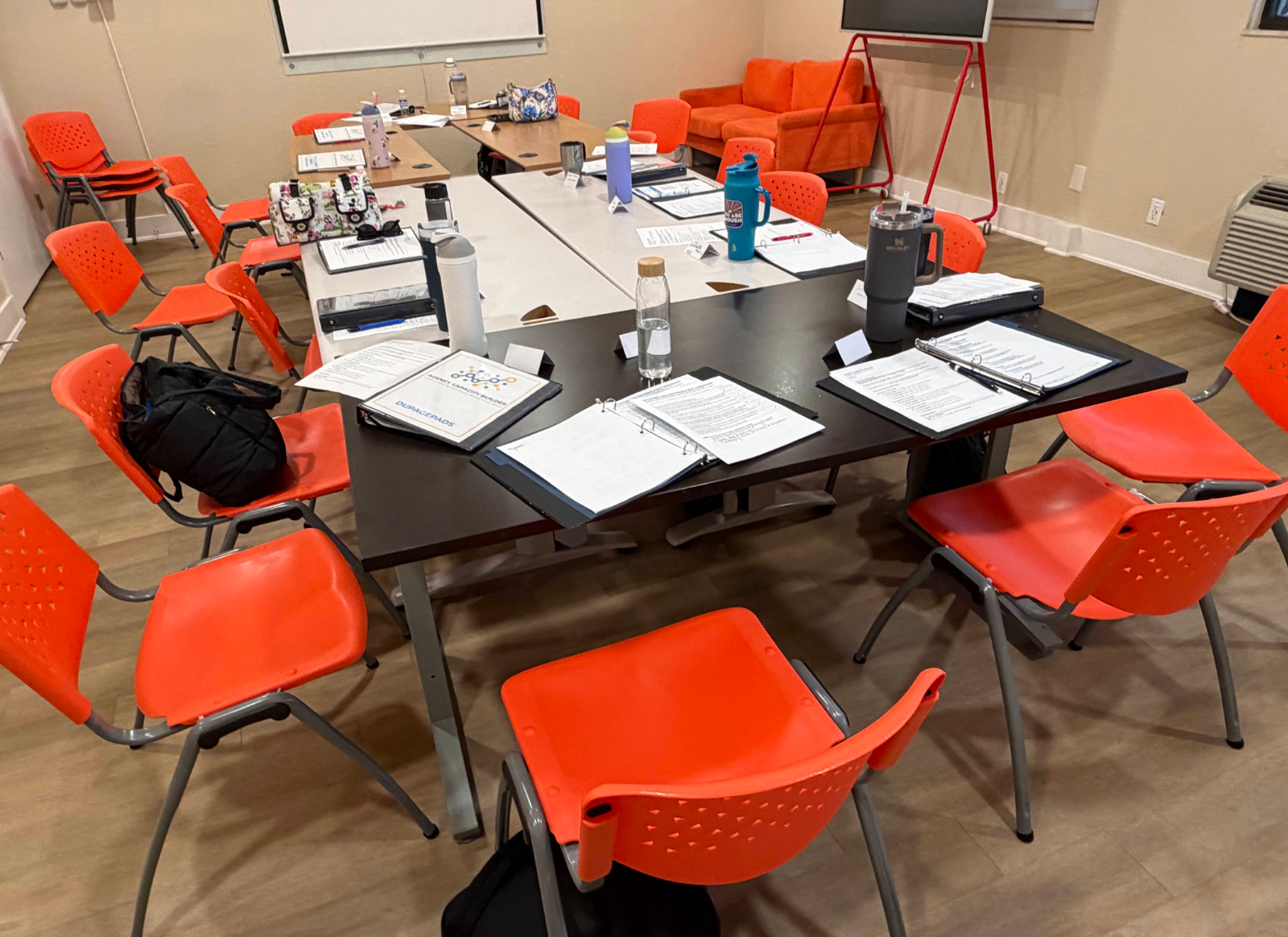
These are three words I've been hearing lately when I sit with nonprofit leaders, not as separate topics but as three threads of the same conversation: conflict, compensation, community. None of them are new, but the frequency has picked up. Conflict shows up first inside the team, most often in the relationship between staff and their own manager or organizational leadership. In one recent stretch of coaching calls, five out of six sessions centered on some version of the same tension: how to navigate conflict with a boss, and whether it was worth staying. The work of supporting clients is heavy, and the people doing it are already carrying a lot of emotion into every day. Being heard and supported by leadership is not a nice-to-have; it is what makes it possible to go back out and do the work well. Compensation is another hard conversation that keeps coming up. Cost of living keeps climbing faster than most organizations' budgets can move, and executive leaders want to pay their people more but are boxed in by funding cuts, limited insurance billing, and market rates they cannot match. The honest version many midlevel leaders are living: I want to stay in this work, but I am taking on a second job to do it. Salary is not the whole story, but it has to be enough of one. Community is what holds the other two up. Leaders need trusted teammates. They need people outside their own organization who understand the weight of the role and can speak into it. Across the peer cohorts I facilitate, that outside perspective is often what turns isolated uncertainty into confirmed direction, leaders realizing they are not the only ones navigating something hard. And they need real connection to the community they serve, because we were created to be connected to each other. None of these three challenges gets solved by ignoring the other two. Leaders who are heard, paid fairly, and connected to people who understand the weight of it can keep doing this work well. That is what conversations with our behavioral health workforce keep confirming.
|
|
|
|
Sometimes the connection we need is already close by...
|
|
|
Not Alone in Not Knowing
|
|
|
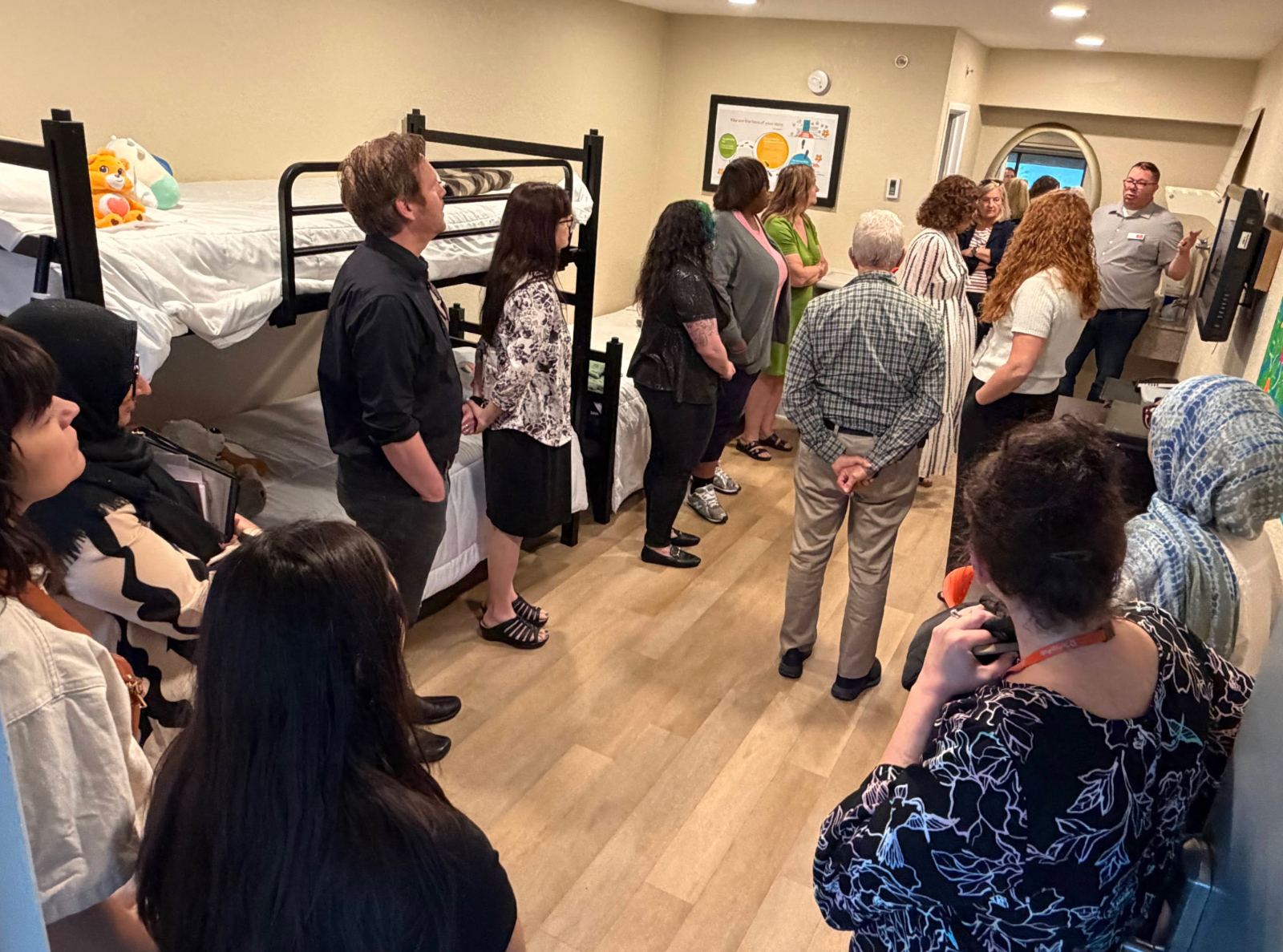
A few weeks ago, I sat down with a middle school principal to learn about the needs he was seeing in his community. I was happy to share some of the resources I have come across along the way. His response: "I had no idea this existed in our community." I hear a version of that response often. There are more resources in our community than any one person could track alone; that is the challenge and the opportunity together. I know the feeling firsthand. I spent years inside a nonprofit and did not know much of what existed either. That is a gap I am trying to close. I am learning alongside the leaders, owners, and neighbors I meet, one conversation at a time, then connect what I find to whoever needs it next. The Community Resource Guide is one way that happens. The Community Leaders Series is another, a space built so people from schools, nonprofits, government, law enforcement, and business can meet the people doing work adjacent to theirs. If you have ever looked around your own community, seen a need, and wondered where to even start, look for the people already willing to share what they know. There are more of them than you think.
|
|
|
|
The next Community Leaders Series gathering is built around exactly that: partnership.
|
|
|
|
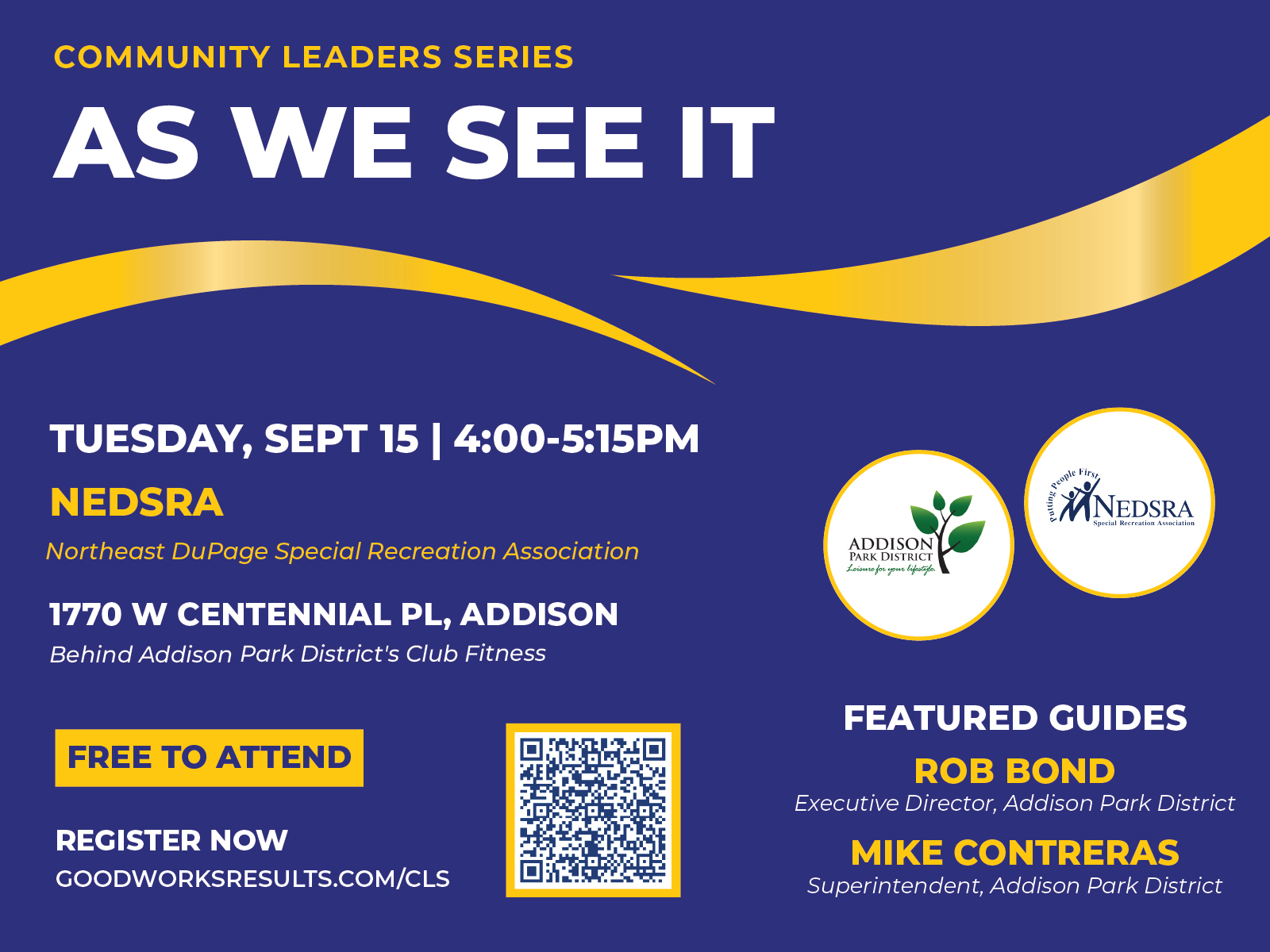
Inclusion as Partnership
Date: September 15, 2026
Time: 4:00 PM to 5:15 PM
Location: 1770 W Centennial Pl, Addison
Inclusion isn't something any one organization does alone. It happens in the partnerships between the people, organizations, and businesses that share a community: a business partnering with the community that supports who it hires and serves, a school partnering with families and the programs students are part of outside the building, local government partnering with the organizations making sure every resident has a place in community life. At the next event in the Community Leaders Series, you'll hear from Rob Bond and Mike Contreras of Addison Park District on the partnership with Northeast DuPage Special Recreation Association (NEDSRA) and what makes it work. It's a partnership rooted in a shared belief that everyone in the community has value and belongs. You'll also meet people whose work touches yours in ways you might not have realized, and start conversations about what could be built together.
|
|
|
Whatever you are carrying, in your organization or your field, you are not the only one. Building community happens when people like you show up in the same room and help each other carry it. Thank you for the good work you are doing.
Daniel Riemenschneider
|
|

|
|
SUPPORTING LEADERS. STRENGTHENING COMMUNITIES.
|
|
|
|
|